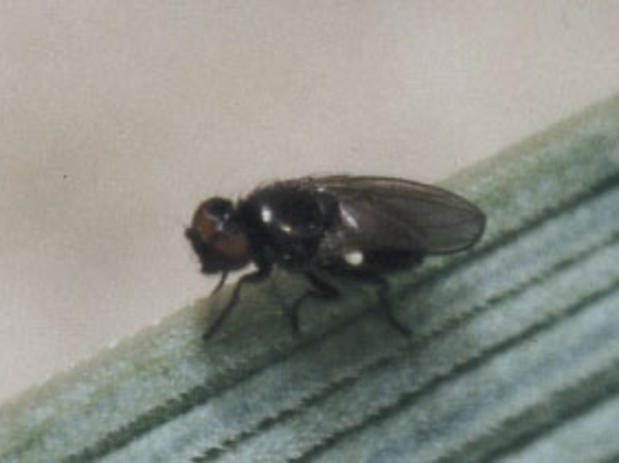
The purpose of this site is to disseminate information on all aspects of the taxonomy, biology, and ecology of agromyzid flies (Diptera: Agromyzidae), commonly known as "the leafmining flies." Because all known agromyzids feed inside living plant tissue, special emphasis will be made regarding host-plant records of both pest and non-pest species. Ultimately, we hope to include species-level information for all agromyzid species on host plants, feeding modes and patterns, life cycles, geographic distributions, parasitoids, morphological characters, molecular phylogeography, and taxonomic history. Achieving this goal will require contributions from agromyzid researchers around the world. -- sign up to contribute!
Please view this page in full [1] in order to see a video detailing how you
can start to get to know your Scratchpad
[1] http://agromyzid.myspecies.info/node/778
Hopefully, someone who has an agromyzid bibliography already made will
contribute to this...
Agromyzid publications during the past 2 years:
Scientists are working on various aspects of agromyzid biology, ecology, and
systematics in countries around the world. To see more detail about any
particular researcher's program, click their name to go to their research
summary page. Please contact us at XXX to be added to this list or to have
your information updated. Thanks!
*Researchers:*
Although agromyzids can be collected by sweepnetting or in Malaise traps, the
best way to collect agromyzids is by rearing the larvae or pupae from their
host plants. This provides inforamtion on not only the host plant, but also
on the feeding mode and location, mine pattern if a leafminer, larval/pupal
morphology, and parasitoids as well.
Using Morphology or Molecules
Adult and larval morphology
Several agromyzids have been used as biological control agents against
invasive weeds.
*Feeding Modes* Although agromyzids are most noted for their larval feeding
on plants, adults also feed
*Host Plants *Here we will discuss host plant families.
Here's where we will discuss agricultural pests.